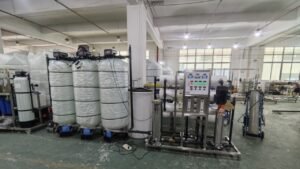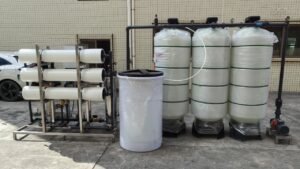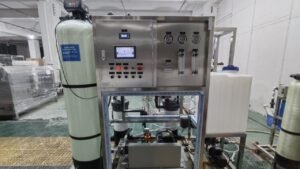

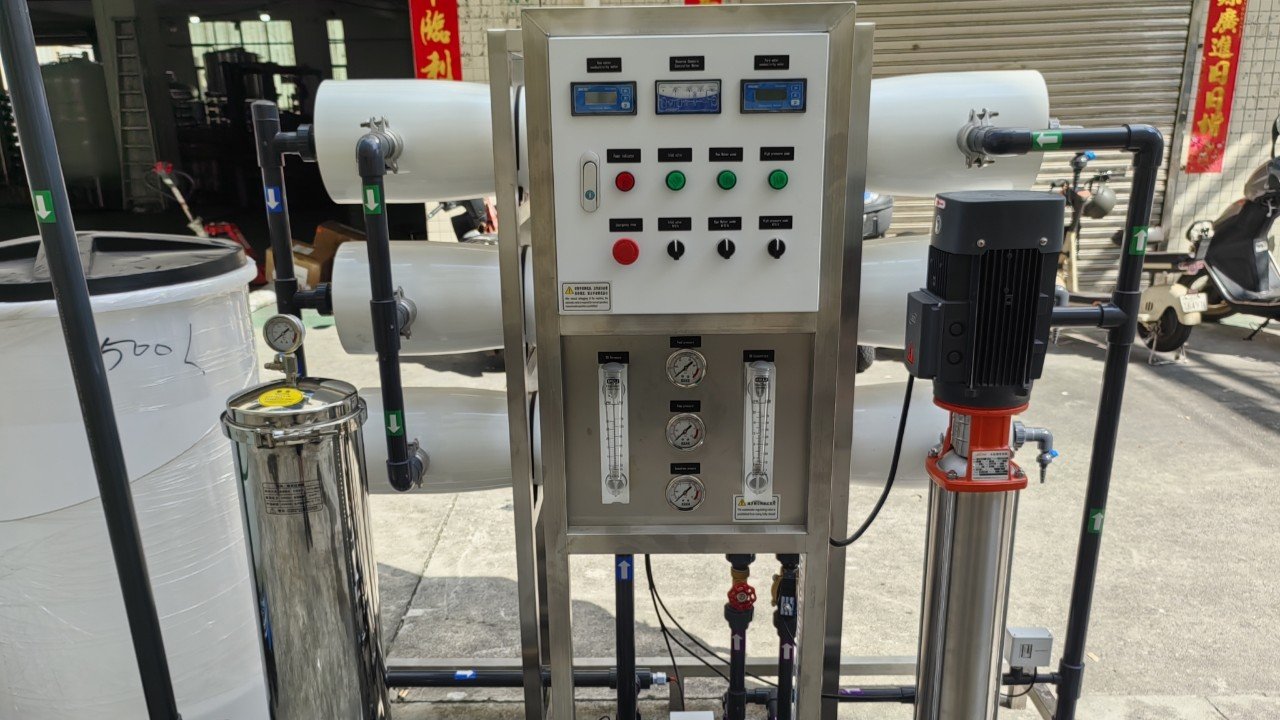
Complete configuration list for the laboratory ultrapure water preparation system (0.25 T/H)
Important Note: This list comprehensively details all components that make up a 0.25 T/H laboratory-grade reverse osmosis pure water system. It is specifically designed to meet the stringent requirements for water resistivity, TOC, and microbial content in applications such as analytical experiments, reagent preparation, and supplying water to precision instruments, ensuring water quality traceability and system stability.
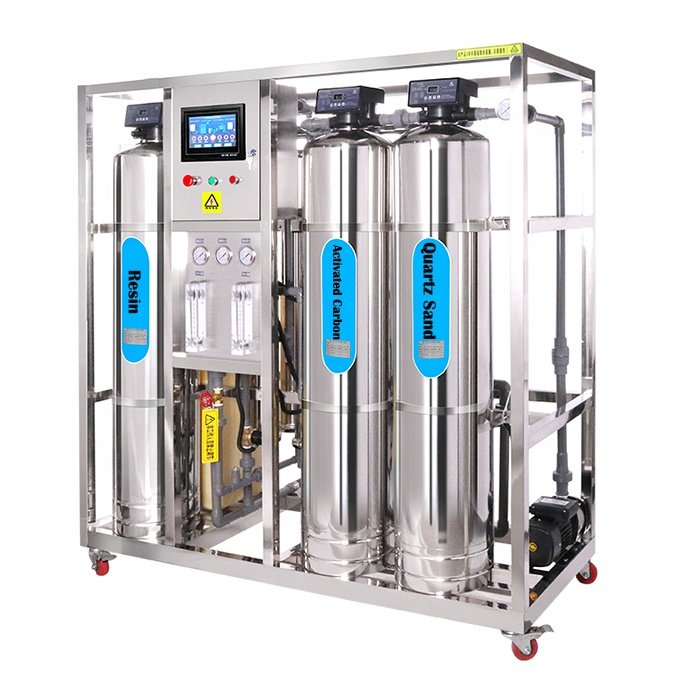
System Technical Overview
Project: Specification Description
System Model : Lab-RO-250UL
Core Process : Pre-treatment + Two-stage RO + EDI (or polishing mixed-bed) + Terminal fine filtration/UV
Designed Water Production Capacity : 0.25 cubic meters/hour
Inlet Water Source : Municipal tap water
Product Water Standard: First-stage RO water: conductivity <10μS/cm; Ultrapure water: resistivity ≥18.2 MΩ·cm @25℃, TOC < 5 ppb
Typical Applications : Central laboratories of universities/research institutes, biomedical R&D centers, quality inspection agencies, water supply for precision analytical instruments (ICP-MS, HPLC)
II. Core Configuration List and Industry Highlights
Module 1: Enhanced Pre-treatment Unit
Dual-stage softener: Prevents RO membrane scaling and ensures stable recovery rate.
Ultrafiltration pre-treatment (optional): As a safety measure after activated carbon, further reduces SDI and provides optimal inlet water for the two-stage RO.
Key point: TOC control is crucial; high-performance nuclear-grade resin activated carbon should be used and disinfected regularly.
Module 2: Dual-stage Reverse Osmosis Main Unit
First-stage high-pressure pump and RO membrane: Removes more than 99% of ions and organic matter.
Second-stage high-pressure pump and RO membrane: Uses the first-stage product water as inlet water for further purification. The second-stage RO has interlock protection based on the conductivity of the first-stage product water.
Key point: System recovery rate optimization, usually using a first-stage concentrate recirculation design to improve overall water utilization efficiency.
Module 3: Ultrapurification and Terminal Protection Module
Electrodeionization (EDI) module: Continuously produces high-purity water with a resistivity of 15-17 MΩ·cm without chemical regeneration.
Or polishing mixed-bed ion exchanger: As a backup or to ensure the final water quality of 18.2 MΩ·cm.
Terminal ultrafiltration filter: 0.22μm or 0.1μm pore size, removes bacteria and pyrogens.
Dual-wavelength ultraviolet sterilizer (185/254nm): Simultaneously sterilizes and degrades TOC.
Nitrogen-sealed pure water tank: Prevents CO₂ dissolution from the air, which can lead to a decrease in water quality. Key Points: The circulating disinfection system and pure water distribution loop must have periodic pasteurization or chemical disinfection capabilities.
Module Four: Intelligent Monitoring and Data Traceability System
Online Water Quality Monitors: Resistivity meter, online TOC analyzer, particle counter.
Touchscreen with Audit Trail Function: Records all operating parameters, water quality data, and alarm events, complying with GLP standards.
Key Points: System integrity; all pipelines, valves, and tanks in contact with pure water are made of 316L stainless steel or high-purity inert plastic (such as PVDF, PFA) to ensure no leaching.