

Public Drinking Water Station
Public drinking fountains are facilities that provide safe drinking water to public places such as parks, stations, and streets. They are not ordinary household appliances, but a complex system engineering project involving public safety, municipal engineering, and long-term operation and maintenance. The key to success lies in ensuring absolute water safety in complex environments, extremely durable equipment, and long-term, low-cost, stable operation.
Key Technologies Explained
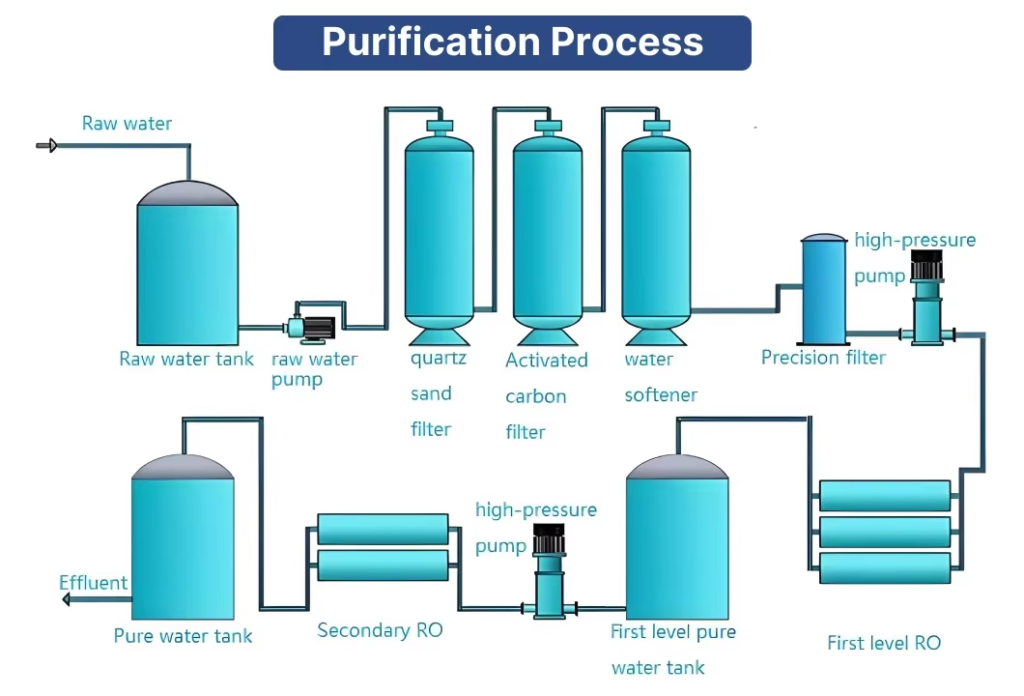
1. Purification Process: Selected Based on Water Quality Risk
| Water Source Condition | Recommended Process | Output Water Quality | Key Characteristics |
|---|---|---|---|
| Good Quality Municipal Tap Water | Ultrafiltration (UF) | Retains minerals; removes bacteria, turbidity. | No wastewater, energy-efficient, lower maintenance cost. |
| Poor Quality Water, High Hardness/Strong Odor | Reverse Osmosis (RO) or Nanofiltration (NF) | Pure water, sweet taste, highest safety margin. | Removes heavy metals, nitrates, etc.; produces concentrate (can be recycled). |
Hygiene & Safety Design (Non-Negotiable Items)
Contact-Free Drinking: The “Bubbler” or “Water-Jet” spout is preferred, where the user’s lips do not touch the fixture, preventing cross-contamination.
Point-of-Use Instant Disinfection: Must include a built-in Ultraviolet (UV) sterilizer to kill microbes potentially growing in pipes at the moment of dispensing.
Food-Grade Materials: All water-contact paths must be SUS304/316 stainless steel, which is antimicrobial and corrosion-resistant.
Environmental Adaptability Design
Outdoor Units: Must have frost protection (electric trace heating or auto-drain), weather/rust resistance (high-quality coating or full stainless steel), vandal-resistant design (special fasteners, robust construction).
Indoor Units: Should focus on waterproof rating (IPX4 or higher), leakage protection, and aesthetics that blend with the interior design.