
Medical Water Safety Alert: Hidden Risks in Pipelines
Multiple Water Quality Risks
Intermittent exceedances of bacterial endotoxins in reverse osmosis water
Lack of real-time monitoring methods, relying on manual sampling
Hidden dangers in central water supply systems
Severe biofilm growth in aging pipes
Fluctuations in end-point water quality in critical departments such as operating rooms and ICUs
Legionella positivity rate in hot water systems reaches 15%
Water bottlenecks in disinfection supply centers
Frequency of cleaning and disinfection equipment due to scale buildup
Residual spots after instrument cleaning
Unstable pure water supply pressure affecting work efficiency
Inconsistent pure water standards in laboratories
Different departments purchase their own small pure water machines
High maintenance costs and lack of unified management
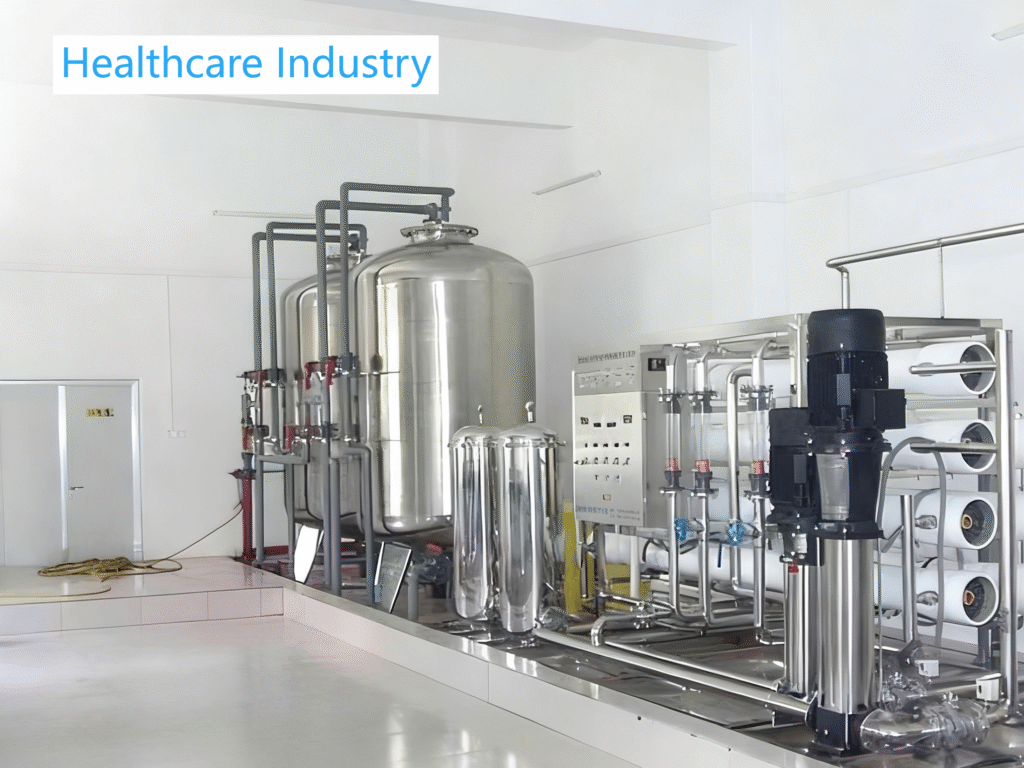
Systematic Solution: Building a Four-Tier Medical Water Safety Barrier
First Level Barrier: Source Optimization and Central Treatment System
Municipal Water Supply → Pre-filtration Multi-stage → Central Soft Water System → Ultraviolet Main Disinfection → Zoned Water Supply Network
Core Upgrade: Add an ultrafiltration system at the main inlet, with a rejection rate >99.99%
Legionella-Specific Control: Hot water system uses continuous silver ion disinfection + timed high-temperature circulation
Digital Twin Network: Establish a 3D model of the entire hospital’s water supply network and optimize water flow dynamics design
Second Level Barrier: Dedicated Water System for Key Departments
Dialysis Water Central Station (Centralized Supply)
Dual-stage Reverse Osmosis + Dual-stage EDI: Product water conductivity <0.1µS/cm, bacterial endotoxin <0.001EU/mL
Closed-Loop Circulation Disinfection: Equipped with hot water… Dual-mode disinfection (both manual and chemical)
Real-time monitoring network: Online monitoring of 6 key parameters; automatic alarm and switch to backup system if exceeding limits
Dedicated purified water system for operating rooms/ICUs
Ready-to-use: Independent module for each surgical area, avoiding pipeline contamination
Aseptic storage and transportation: Equipped with nitrogen-sealed water tank and circulating disinfection system
Water quality traceability system: Water used in each surgery can be traced back to preparation time and water quality records
Third-level barrier: Direct protection for key equipment
Specialized solution for the disinfection supply center
Three-stage treatment process: Softening + reverse osmosis + electro-deionization, hardening… Zero degree
Completely solves instrument staining problem
90% reduction in cleaning equipment failure rate
Intelligent distribution system: Automatically matches water quality and quantity according to the cleaning program
Centralized pure water system for laboratories
On-demand tiered supply:
Level 1 water (LC-MS/MS, etc.): Resistivity 18.2 MΩ·cm
Level 2 water (routine testing): Resistivity > 10 MΩ·cm
Level 3 water (cleaning, etc.): RO pure water
Remote monitoring platform: Real-time monitoring of water quality and usage at each water intake point
Fourth level of barrier: Hospital-wide intelligent monitoring and emergency response
Medical Water Safety Intelligent Management Platform
327 online monitoring points: covering bacteria, endotoxins, chemical indicators, etc.
Risk Warning Map: Visual display of water quality risks across the entire hospital.
Mobile Inspection System: Nurses can view real-time water quality via tablets at their stations.
Automatic Report Generation: Meets JCI, tertiary hospital accreditation requirements, etc.
Emergency Response Mechanism
Establishment of a Level 4 water quality risk emergency response plan.
Equipped with emergency water supply interfaces and equipment in key departments.
Monthly emergency drills and system redundancy tests.
Medical Quality and Operational Achievements
Breakthrough Progress in Infection Control
Indicators Before Implementation After Implementation (12 Months) Improvements
Dialysis-Related Infection Rate: 1.8‰ 0.5‰ ↓72%
Surgical Site Infection Rate: 1.2% 0.7% ↓42%
Legionella Positive Rate in Hot Water System: 15% 0.3% ↓98%
Water-Related Infection Outbreaks: 2 times/year 0 times 100% Elimination
Operational Efficiency and Cost Optimization
Equipment Maintenance Costs
Dialysis machine repair frequency reduced by 65%
Cleaning and disinfection equipment failure rate decreased by 90%
Annual water system maintenance cost savings for the entire hospital: 3.12 million RMB
Human Resource Optimization
Water sampling man-hours reduced by 80%
Infection Control Department water monitoring workload reduced by 70%
Engineering Department preventative maintenance efficiency increased by 45%
Medical Resource Conservation
Rewashing rate due to instrument cleaning issues decreased from 8% to 0.5%
Dialysis machine reuse qualification rate increased by 12%
Laboratory reagent consumption reduced by approximately 15% due to stable water quality
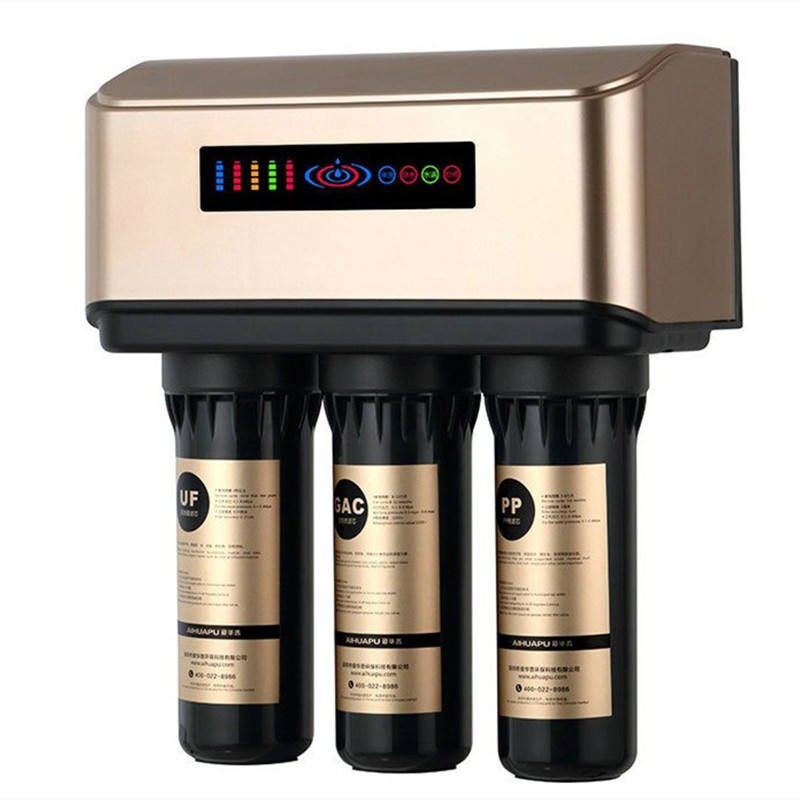
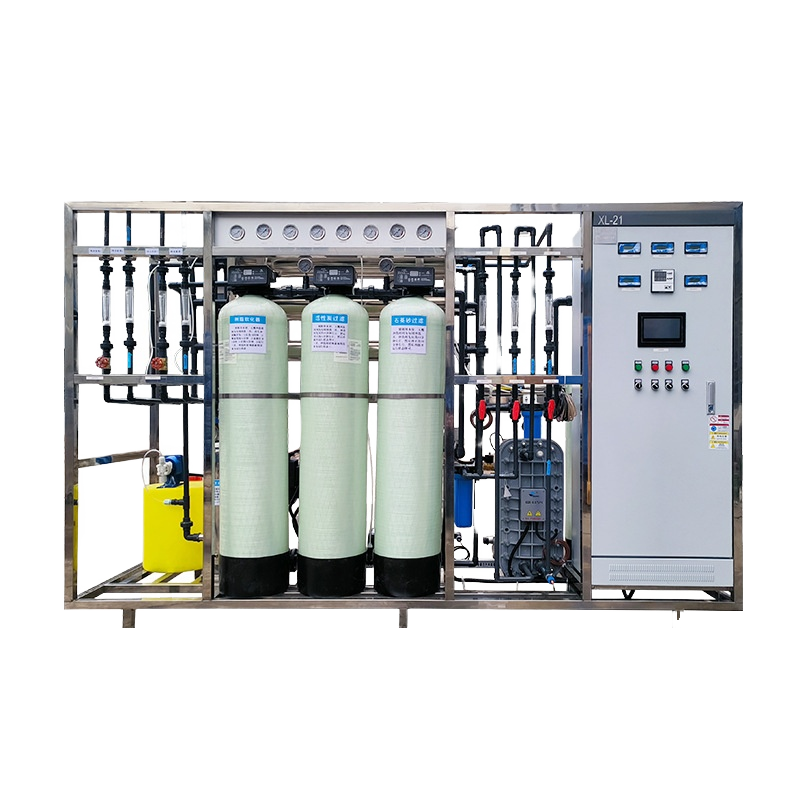
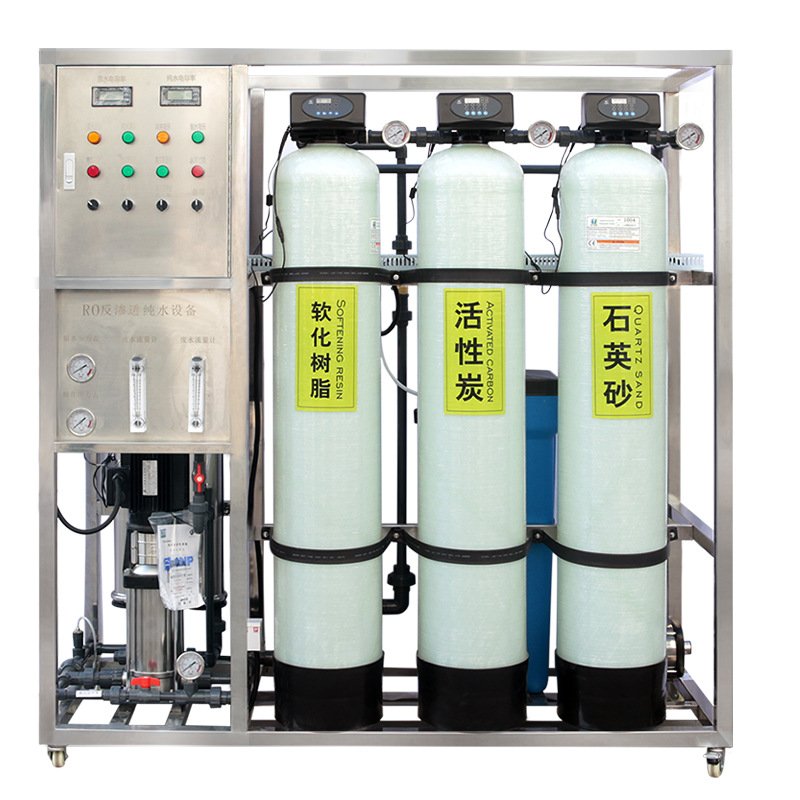
Why Choose Us?
Industry Expertise: We have a deep understanding of the specific requirements of the food industry (safety, stability, compliance), and our solutions are far from generic.
Technology Integration Capabilities: We excel at seamlessly integrating technologies such as physical filtration, membrane separation, ion exchange, and advanced oxidation to create optimal combinations.
Value Beyond Equipment: We deliver more than just equipment; we provide a long-term value partnership encompassing continuous optimization services, intelligent monitoring, and water-saving strategies.
Our Services
A complete value loop from "diagnosis" to "delivery," and then to "escort" and "co-creation."
Professional Consultation and System Diagnosis
We provide comprehensive diagnostic services, from water quality testing and process auditing to pain point analysis.
Customized design and integration implementation
What is delivered is not equipment, but a reliable "production support system".
Intelligent Operation and Maintenance and Continuous Optimization
Keep the system running at its best.
Technology upgrades and strategic cooperation
We focus on your long-term development and provide expansion, modification, and technology upgrade services based on your existing systems.